

What Is SEO? A Beginner’s Guide to Search Engine Optimisation
What Is SEO?
SEO, or search engine optimisation, is the process of improving a website so that it is easier for search engines to understand and more useful to people looking for relevant information, products or services. It can help a website appear more prominently in unpaid search results on platforms such as Google and Bing.
SEO does not guarantee a particular ranking. Search engines use many signals to decide which pages to show, and their systems change over time. Effective SEO focuses on making a website clear, relevant, trustworthy and straightforward to use.
How does SEO work?
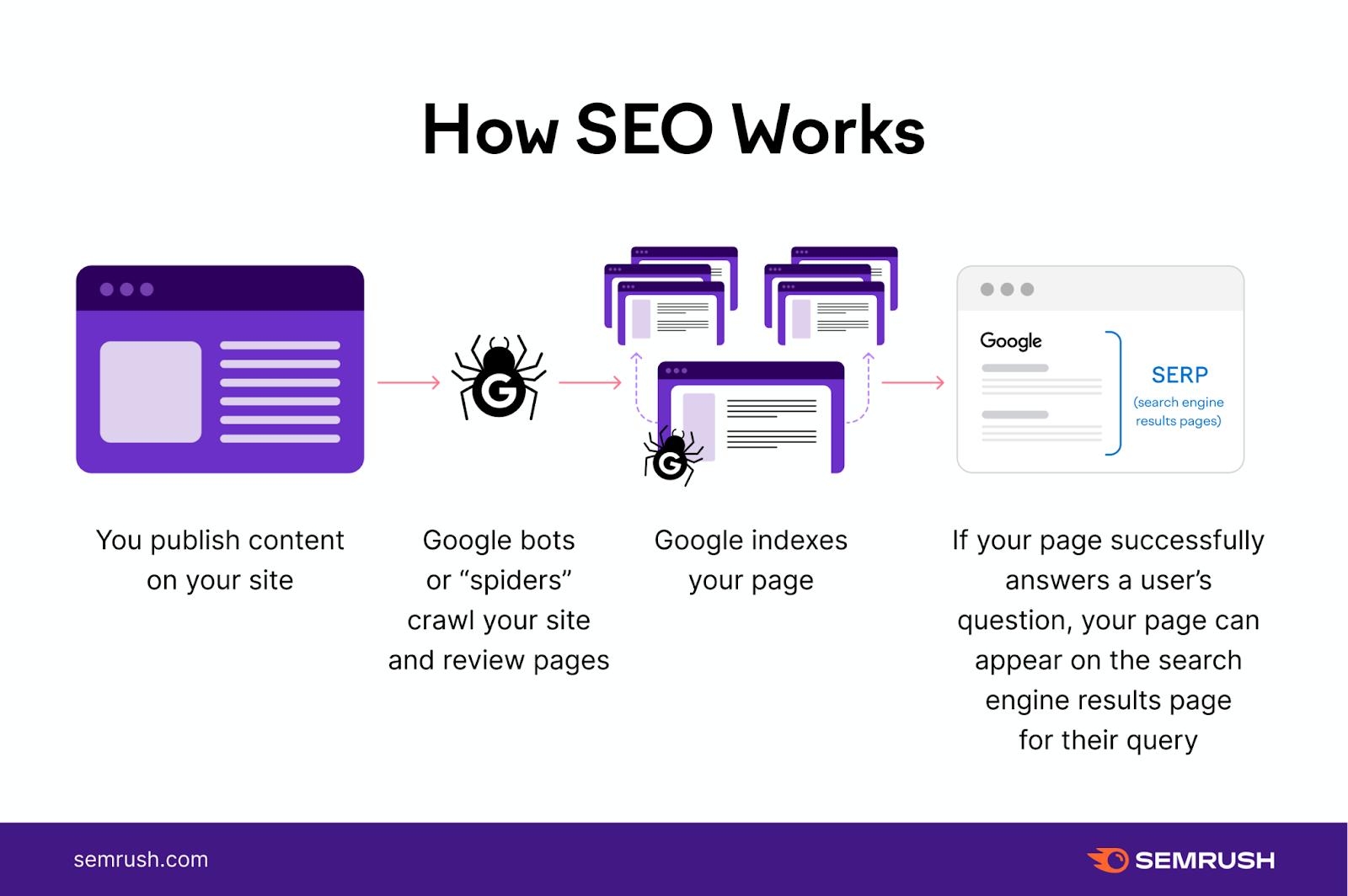
Search engines discover pages by crawling the web, then organise and assess the information they find. When someone searches, the search engine selects and orders pages that it considers relevant and helpful for that query.
SEO helps search engines interpret a site and helps visitors find the information they need. This can involve improving a page’s content, making the site easier to navigate, and ensuring it works well on mobile devices.
The main areas of SEO
On-page SEO
On-page SEO involves improving the content and elements of individual pages. This may include:
- Writing useful, original content that answers visitors’ questions
- Using clear page titles and headings
- Including relevant search terms naturally
- Writing concise meta descriptions that explain what a page is about
- Adding descriptive text for images where appropriate
- Linking related pages together in a helpful way
Technical SEO
Technical SEO concerns the way a website is built and accessed. The aim is to make it easier for search engines to crawl and understand the site, while providing a good experience for visitors. Common considerations include:
- Making pages load reliably and promptly
- Ensuring the site works on mobile phones and tablets
- Using a secure HTTPS connection
- Fixing broken links and avoiding confusing site structures
- Providing a clear XML sitemap where useful
- Managing duplicate or inaccessible pages appropriately
Off-page SEO
Off-page SEO refers to signals and activity beyond a website that can help establish its reputation. Links from relevant, reputable websites can be one such signal. Businesses may also build visibility through useful partnerships, public relations and industry participation. The focus should be on earning genuine recognition rather than buying or creating manipulative links.
Why is SEO important?
People often use search engines to find answers, compare options and discover local businesses. A well-optimised website can make it easier for the right audience to find and understand what an organisation offers. SEO may support:
- More relevant visits from people actively searching for related information
- Improved visibility for a business, service or publication
- A better experience through clearer content and easier navigation
- Long-term discovery of useful pages, alongside other marketing activity
SEO is not a substitute for a good product, service or website. It works best when it supports real value for visitors and fits into a broader marketing plan.
How do you get started with SEO?
- Understand your audience. Consider what people need, what they are likely to search for and what information would genuinely help them.
- Review your website. Check that important pages are accessible, easy to navigate and suitable for mobile devices.
- Plan useful content. Create clear pages that address specific questions or needs, rather than writing simply to include keywords.
- Improve page details. Use descriptive titles, headings and links to make each page’s purpose clear.
- Measure and refine. Use analytics and search performance tools to understand what people find useful and where improvements may be needed.
How long does SEO take?
SEO is a gradual process. The time needed to see changes depends on factors such as a website’s history, its competition, the quality of its content and the scale of any technical issues. Some improvements may help visitors straight away, while changes in search visibility can take longer. There is no guaranteed timetable or ranking position.
SEO best practice
Sound SEO puts people first. Avoid tactics such as keyword stuffing, hidden text, misleading content or schemes designed to manipulate links. These approaches can damage trust and may conflict with search engine guidelines. Instead, publish accurate and helpful information, keep the site in good working order, and make improvements based on evidence.
In summary
SEO is the practice of making a website more understandable, useful and discoverable in unpaid search results. It combines relevant content, sound technical foundations and a credible online presence. While results take time and cannot be guaranteed, consistent, user-focused work can help connect a website with the people it is intended to serve.
9 Essential Tips for Mastering SEO and Boosting Your Website’s Visibility
- SEO means search engine optimisation.
- It helps websites appear in unpaid search results.
- Use keywords people actually search for.
- Write useful, original content.
- Make page titles and descriptions clear.
- Organise pages with helpful headings.
- Ensure your website works well on mobile.
- Improve loading speed and accessibility.
- Earn links from trusted, relevant websites.
SEO means search engine optimisation.
SEO stands for search engine optimisation: the process of improving a website so search engines can understand its content and people can find it more easily in unpaid search results. It includes creating helpful, relevant content, making pages clear and easy to use, and ensuring the website works well on different devices.
It helps websites appear in unpaid search results.
SEO helps websites appear in unpaid search results by making their pages clearer, more relevant and easier for search engines to understand. This can help people discover useful content, products or services when they search online, although SEO cannot guarantee a particular ranking.
Use keywords people actually search for.
Use keywords that people actually search for by researching the words and phrases your audience uses when looking for information, products or services like yours. Consider the questions they ask and the language they use, then include relevant terms naturally in your page titles, headings and content. Avoid forcing in keywords or repeating them excessively: useful, clear writing should always come first.
Write useful, original content.
Write useful, original content that gives readers clear, accurate answers to their questions. Focus on what your audience needs rather than repeating keywords or copying material from other websites. Well-organised, genuinely helpful information can build trust, keep visitors engaged and help search engines understand what your page is about.
Make page titles and descriptions clear.
Make page titles and descriptions clear so people and search engines can quickly understand what each page is about. Write a unique, concise title that reflects the page’s main topic, and a useful description that sums up what visitors can expect. Accurate, engaging wording can help your pages stand out in search results and encourage the right people to click.
Organise pages with helpful headings.
Organise your pages with clear, helpful headings to make content easier to scan and understand. Use one main heading to introduce the page, then structure the information with descriptive subheadings in a logical order. This helps readers find what they need and gives search engines useful context about the topics covered. Keep headings accurate and natural, rather than filling them with keywords.
Ensure your website works well on mobile.
Ensure your website works well on mobile, as many people browse and search on their phones. Pages should load quickly, text should be easy to read without zooming, and menus, buttons and forms should be simple to use on a smaller screen. A mobile-friendly experience helps visitors find what they need and can support your SEO by making your site easier to access and use.
Improve loading speed and accessibility.
Improving your website’s loading speed and accessibility makes it easier for more people to use. Compress images, reduce unnecessary code and check that pages work smoothly on mobile devices. Use clear headings, descriptive link text, sufficient colour contrast and helpful alt text for images. These changes can improve the visitor experience and help search engines understand your pages, supporting your wider SEO efforts.
Earn links from trusted, relevant websites.
Earn links from trusted, relevant websites by creating useful content that others genuinely want to reference, and by building relationships with organisations in your field. These links can help search engines discover your pages and may support your site’s credibility. Focus on relevance and quality rather than quantity, and avoid buying links or using schemes designed to manipulate search rankings.



Leave a Comment