

Digital Agency SEO: A Practical Guide to Growing Your Online Presence
Digital Agency SEO: A Practical Guide to Growing Your Online Presence
For businesses looking to attract more customers online, search engine optimisation (SEO) can be an important part of a wider digital marketing strategy. A digital agency can help plan and deliver SEO activity, from improving a website’s technical foundations to creating useful content and earning relevant links.
But what does digital agency SEO involve, and how can a business tell whether an agency is the right fit? This guide covers the main services, the benefits of working with specialists and the questions to ask before getting started.
What is digital agency SEO?
Digital agency SEO is the work an agency carries out to help a website become more visible in organic search results. Organic results are the unpaid listings shown by search engines. SEO aims to make a website easier for search engines to understand and more useful to the people who visit it.
SEO is not a single task or a quick fix. It combines research, technical improvements, content development and ongoing analysis. The right approach depends on a business’s goals, audience, industry and current website performance.
What does an SEO agency do?
SEO agencies offer a range of services. A typical programme may include the following.
SEO audits and strategy
An audit reviews a website’s current performance and identifies opportunities or obstacles. It may look at site structure, page speed, mobile usability, indexing, content quality and existing search visibility. The agency can then use these findings to create a strategy with clear priorities.
Keyword and audience research
Keyword research helps identify the words and phrases people use when looking for products, services or information. Good research considers more than search volume: it also looks at intent. Someone searching for general advice may need different content from someone ready to compare suppliers or make a purchase.
Technical SEO
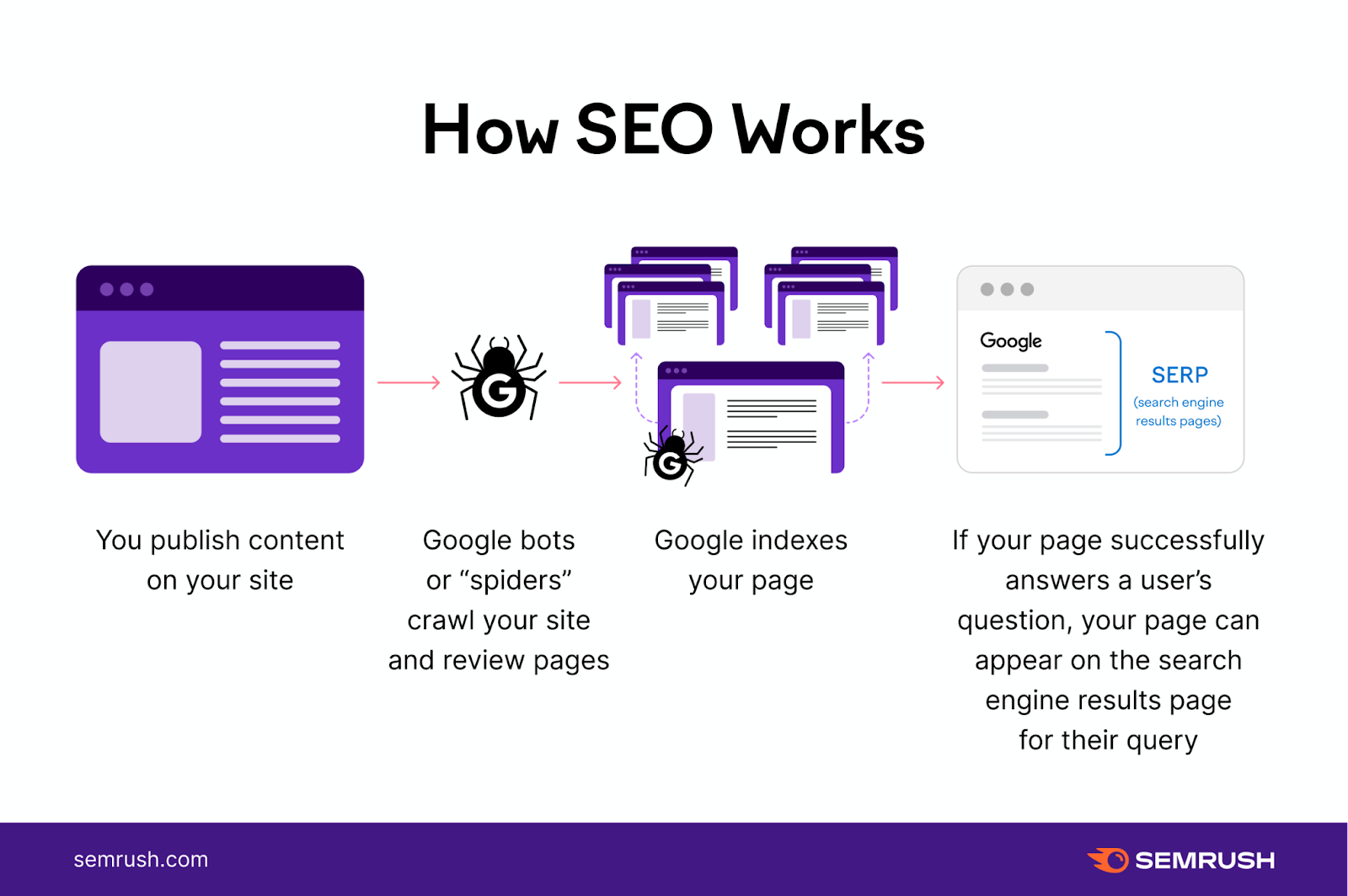
Technical SEO focuses on how a website is built and accessed. Work may include resolving crawl and indexing issues, improving page speed, making the site easier to navigate and ensuring it works well on mobile devices. A technically sound website gives search engines a clearer view of its pages and can provide a better experience for visitors.
On-page optimisation
On-page SEO involves improving individual pages. This can include refining page titles and headings, organising content, adding descriptive image text and making internal links more useful. The aim is to help both visitors and search engines understand what each page is about.
Content planning and creation
Useful, well-structured content can answer customers’ questions and demonstrate a business’s expertise. An agency may help plan new articles, service pages or guides, as well as improve existing content. Content should be written for people first, with search terms included naturally where relevant.
Digital PR and link earning
Links from relevant, trustworthy websites can help people discover a business and may support its search visibility. Digital PR can involve creating stories, research or resources that publishers and other organisations may choose to reference. Quality and relevance matter more than simply acquiring a large number of links.
Measurement and reporting
SEO reporting should show what has been done and how performance is changing. Agencies may track organic visits, search visibility, enquiries, sales and other agreed measures. Reports are most useful when they connect activity to business objectives rather than focusing only on rankings.
Why work with a digital agency?
Working with an agency can give a business access to a range of skills, including technical SEO, content, analytics and digital PR. This can be useful when an in-house team has limited time or specialist experience.
An agency can also bring an outside perspective. It may identify issues that are easy to overlook internally, help prioritise work and provide a structured process for testing and improving the website. For businesses operating in competitive markets, consistent SEO work can help build visibility over time.
However, hiring an agency does not remove the need for collaboration. The business still needs to provide context about its customers, products, priorities and expertise. The strongest results often come from a close working relationship between the agency and the client’s team.
How to choose an SEO agency
Choosing an agency is about more than comparing prices or promises. Consider the following when assessing potential partners:
- Relevant experience: Ask whether the agency has worked with similar business models, audiences or challenges.
- A clear process: The agency should explain how it researches, prioritises and delivers SEO work.
- Transparent reporting: Find out what will be reported, how often and how results will be connected to your objectives.
- Realistic expectations: SEO takes time, and no agency can guarantee a particular ranking. Be cautious of promises that sound certain or unusually fast.
- Ethical methods: Ask how the agency approaches content and link building. Avoid tactics designed to manipulate search engines or conceal activity.
- Good communication: Agree who your main contact will be, how often you will meet and what input the agency will need from your team.
How long does SEO take?
There is no universal timeline for SEO. Results depend on factors such as the website’s starting point, the level of competition, the scale of the work and how quickly changes can be implemented. Technical fixes may improve the way a site is accessed sooner, while building visibility for competitive search terms can take considerably longer.
A responsible agency will set out realistic milestones, explain what is within its control and review progress regularly. SEO should be treated as an ongoing investment rather than a one-off change.
Measuring the success of digital agency SEO
The right measures depend on what the business wants to achieve. Useful indicators may include:
- Organic visits to important pages
- Visibility for relevant search terms
- Enquiries, bookings or sales from organic traffic
- Engagement with key pages and content
- Improvements to technical health and site usability
Rankings can offer useful context, but they should not be viewed in isolation. A high position is only valuable if it reaches the right audience and contributes to meaningful business outcomes.
Making SEO part of a wider digital strategy
SEO often works best alongside other digital marketing activities. Insights from paid search, social media, email campaigns and customer research can help shape content and improve understanding of audience needs. In turn, organic search can provide a lasting route for people to discover a business.
When selecting a digital agency for SEO, look for a partner that takes the time to understand your business, communicates clearly and focuses on sustainable progress. With a practical strategy and consistent work, SEO can help strengthen online visibility and make it easier for potential customers to find the information they need.
7 Key Benefits of Digital Agency SEO for Business Success
- Improves visibility in search results.
- Attracts relevant organic traffic.
- Builds trust with potential customers.
- Supports long-term business growth.
- Combines technical and creative expertise.
- Measures progress against clear goals.
- Connects SEO with wider digital marketing.
Challenges of Digital Agency SEO: Delayed Results, High Costs, Continuous Effort, and Potential Risks
- SEO results can take time to appear.
- Agency fees may be costly.
- Results depend on ongoing work.
- Poor tactics can harm search visibility.
Improves visibility in search results.
A key benefit of digital agency SEO is improved visibility in search results. By researching relevant search terms, optimising website pages and addressing technical issues, an agency can help a business appear more prominently when potential customers look for related products or services. Greater visibility can make it easier for the right audience to discover the business and explore what it offers.
Attracts relevant organic traffic.
Digital agency SEO can help attract relevant organic traffic by improving a website’s visibility for searches related to its products, services and expertise. Through keyword research, useful content and targeted optimisation, an agency can connect a business with people who are already looking for what it offers. This can bring more qualified visitors to the website and create greater opportunities for enquiries, bookings or sales.
Builds trust with potential customers.
Digital agency SEO can help build trust with potential customers by making a business easier to find when people search for relevant products, services or advice. Helpful, accurate content and a well-organised website can demonstrate expertise and answer common questions, while strong organic visibility can reassure visitors that the business is established and relevant. Over time, a consistent, useful presence in search results can encourage potential customers to feel more confident about getting in touch.
Supports long-term business growth.
Digital agency SEO can support long-term business growth by helping a company build lasting visibility in organic search. By improving a website, creating useful content and reaching the right audiences, an agency can help attract a steady flow of potential customers over time. Unlike short-term campaigns that stop generating results when the budget ends, well-planned SEO can continue to deliver value as a business evolves—provided its strategy is regularly reviewed and adapted.
Combines technical and creative expertise.
A key advantage of digital agency SEO is the way it combines technical and creative expertise. Specialists can improve a website’s foundations—such as its speed, structure and accessibility—while creating engaging content that answers customers’ questions. Bringing these skills together helps make a site easier for search engines to understand and more valuable for people to use.
Measures progress against clear goals.
A key benefit of digital agency SEO is that it measures progress against clear goals. Rather than focusing solely on rankings, an agency can track meaningful outcomes such as organic visits, enquiries, sales or bookings. Regular reporting shows what is working, highlights areas for improvement and helps ensure SEO activity stays aligned with the business’s priorities.
Connects SEO with wider digital marketing.
A digital agency can connect SEO with your wider digital marketing activity, helping each channel support the others. Insights from paid search, social media, email campaigns and customer research can inform keyword choices, content planning and audience targeting. In turn, SEO can help more people discover your website and give your other campaigns a stronger destination. This joined-up approach creates a more consistent customer experience and helps your business make better use of its marketing efforts.
SEO results can take time to appear.
One drawback of digital agency SEO is that results can take time to appear. Improvements to a website may take weeks or months to influence search visibility, and progress depends on factors such as competition, the site’s starting point and how quickly recommended changes are implemented. Businesses should therefore view SEO as a long-term investment, set realistic expectations and avoid relying on it as their only source of immediate leads.
Agency fees may be costly.
One potential drawback of digital agency SEO is the cost. Agency fees can be substantial, particularly for small businesses or those with limited marketing budgets, and ongoing work may be needed before results become noticeable. Before committing, compare what different packages include, check for extra charges and make sure the proposed investment fits your business goals and budget.
Results depend on ongoing work.
One drawback of digital agency SEO is that results depend on ongoing work rather than a one-off project. Search engine algorithms, competitors and customer behaviour change over time, so a website needs regular monitoring, updates and improvements to maintain its visibility. This means businesses must be prepared to commit time and budget over the longer term; if SEO activity stops, progress may slow or rankings may eventually decline.
Poor tactics can harm search visibility.
Poor SEO tactics can do more harm than good. Practices such as buying low-quality links, stuffing pages with keywords or publishing unhelpful content may breach search engine guidelines and damage a website’s reputation. This can lead to reduced visibility or, in serious cases, search penalties. Before hiring a digital agency, ask how it approaches SEO and make sure its methods are transparent, ethical and focused on long-term results.


Leave a Comment