
Local SEO Tools: A Practical Guide for UK Businesses
Local SEO Tools: A Practical Guide for UK Businesses
Local search engine optimisation (SEO) helps businesses appear when people search online for products or services in a particular area. A plumber in Leeds, a café in Bristol and a solicitor in Glasgow all need to reach customers nearby, but the steps that help them do so can be difficult to manage manually.
Local SEO tools can help businesses monitor their visibility, manage business information, understand customer feedback and identify opportunities to improve their websites. The right tools depend on your goals, budget and the number of locations you manage. This guide covers the main types and explains how to use them effectively.
What are local SEO tools?
Local SEO tools are platforms and services that help businesses improve or measure their visibility in local search results. Some are free, while others offer paid features such as local rank tracking, citation monitoring and review management.
They can support tasks including:
- Managing your Google Business Profile
- Checking local search rankings
- Finding relevant local keywords
- Keeping business details consistent across directories
- Monitoring reviews and responding to customers
- Measuring website visits, calls and other outcomes
- Checking technical and on-page SEO issues
Essential free tools
Google Business Profile
Google Business Profile is a core tool for businesses that serve customers at a physical location or travel to customers. It lets eligible businesses manage how their details appear across Google Search and Maps.
Use it to keep your address or service area, opening hours, contact details and categories accurate. You can also add photographs, publish updates and respond to reviews. Complete, accurate information helps customers understand what you offer, although no profile can guarantee a particular ranking.
Google Search Console
Google Search Console shows how a website performs in Google Search. It can report queries that bring people to your site, impressions, clicks and indexing issues. It does not provide a complete picture of local rankings, but it is useful for understanding whether local pages are attracting search traffic and for identifying technical problems.
Google Analytics 4
Google Analytics 4 helps you understand what visitors do after arriving at your website. With suitable configuration, you can measure actions such as enquiry form submissions, calls or bookings. Linking traffic data to meaningful business outcomes makes it easier to assess whether your local SEO work is delivering value.
Bing Places for Business
Bing Places for Business allows eligible businesses to manage their information in Bing Search and Maps. Google is often the main focus of local SEO, but keeping details accurate on other platforms can help customers who use different search engines and mapping services.
Tools for local rankings and competitor research
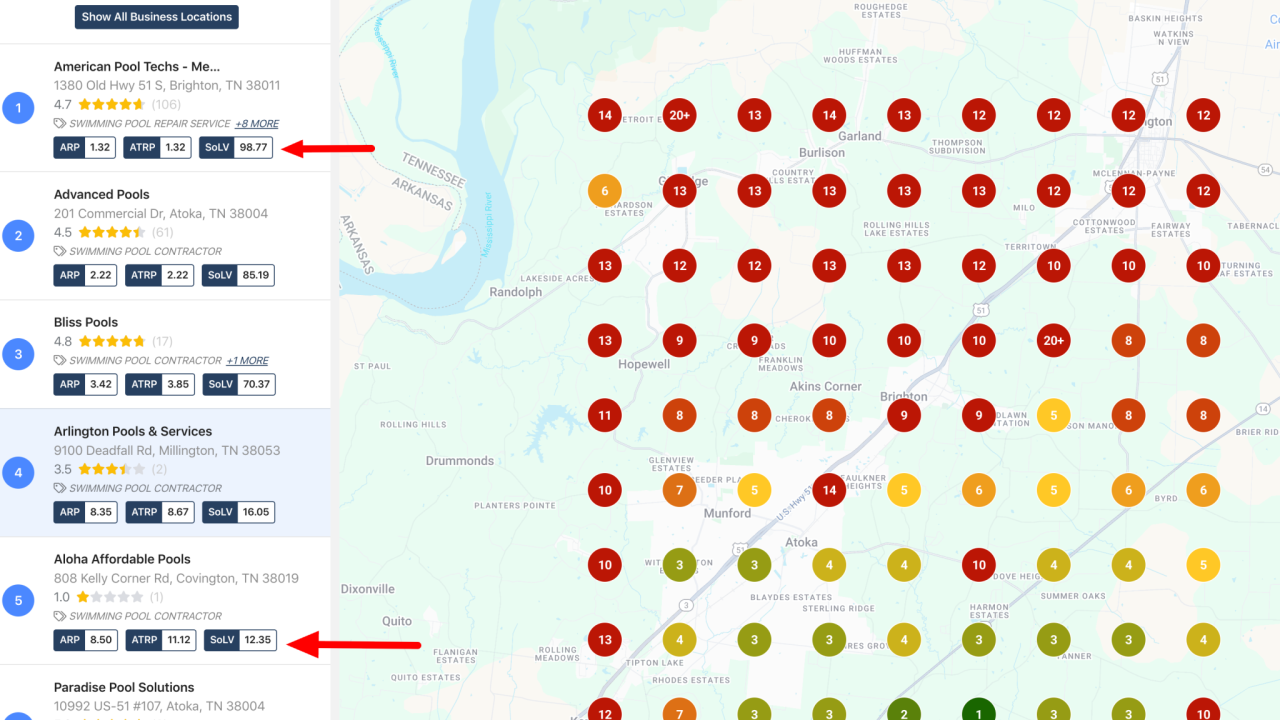
Local rankings can vary by searcher location, device and search term. A single search from your office is therefore not a reliable way to assess performance across an entire town or city. Local rank-tracking tools can check selected keywords from specified locations and help reveal patterns over time.
Platforms such as BrightLocal, Whitespark and Semrush offer features that may include local rank tracking, competitor research or local listing management. Features and plans change, so compare current offerings before choosing a service.
When reviewing local rankings, focus on a useful set of searches rather than tracking every possible phrase. Include service terms and locations that reflect how customers actually search. Treat ranking reports as indicators, not as a complete measure of success: enquiries, calls, bookings and sales matter too.
Tools for business listings and citations
A citation is an online mention of a business’s name, address and phone number. Citations may appear on directories, industry websites, social platforms and local listings. Accurate details help customers reach the business and reduce confusion when information is inconsistent.
Tools such as BrightLocal, Whitespark and Semrush’s local listing features can help businesses find, review or manage listings, depending on the service and plan. Before submitting information, check that a directory is relevant and reputable. Creating large numbers of low-quality listings is not a substitute for accurate information and useful local content.
For businesses with multiple branches, listing tools can make it easier to manage location details at scale. Each branch should have its own accurate information, including its own phone number and opening hours where appropriate.
Tools for reviews and reputation management
Customer reviews influence how potential customers perceive a business. They can also provide useful feedback about service quality and recurring issues. Review-management platforms can help businesses monitor feedback from different websites and organise responses.
Some local SEO platforms include review monitoring, while dedicated reputation-management services may offer additional features. Whichever tool you use, replies should be prompt, professional and specific. Avoid sharing private customer information, and do not offer rewards in exchange for positive reviews. Follow the policies of the platform where the review appears.
Keyword research and website auditing tools
Local keyword research helps identify the language customers use when looking for nearby services. General SEO platforms such as Semrush and Ahrefs can support keyword and competitor research, though their data may not represent every local search precisely. Google Search Console can also reveal queries for which your website already appears.
Website auditing tools can identify issues such as broken links, slow pages, missing title tags or pages that search engines cannot access. These checks are useful, but automated recommendations should be reviewed before making changes. A technically tidy website still needs clear, helpful content that answers customers’ questions.
For local landing pages, provide genuinely useful information about the service and area. Avoid publishing many near-identical pages that differ only by town name. Thin or repetitive pages offer little value to readers.
How to choose the right local SEO tools
Before paying for a platform, decide what you need to improve. A single-location business may only need a well-maintained Google Business Profile, Search Console, Analytics and a simple review process. A company with several branches may benefit from tools that centralise listings, reviews and location-based reporting.
Consider the following questions:
- Does the tool cover the locations and platforms that matter to your customers?
- Can you understand and act on its reports?
- Does it integrate with your existing website or analytics setup?
- Are the features included in the plan you are considering?
- Can you export your data if you stop using the service?
- Will the time saved justify the cost?
It is usually better to use a small number of tools consistently than to subscribe to several overlapping platforms. Start with the basics, establish a regular process and add paid features when they solve a clear problem.
Using local SEO tools effectively
Tools are most useful when they support sound marketing practices. Keep business details accurate, make your website easy to use on mobile devices, create helpful location-specific content and make it straightforward for customers to contact you. Monitor reviews and respond appropriately. Check performance regularly, but allow enough time to identify meaningful trends.
Local SEO tools cannot guarantee higher rankings or a particular volume of leads. Search results change, and visibility depends on many factors. Used thoughtfully, however, these tools can help UK businesses make informed decisions, spot problems earlier and build a stronger presence in the areas they serve.
Top 8 Advantages of Local SEO Tools for Boosting Business Visibility and Efficiency
- Improve visibility in local search results.
- Track rankings across different locations.
- Find relevant local keywords.
- Keep business listings accurate and consistent.
- Monitor and manage customer reviews.
- Identify website SEO issues.
- Measure traffic, calls and enquiries.
- Save time on routine SEO tasks.
Challenges of Local SEO Tools: Cost, Data Limitations, and Learning Curve
- Paid tools can be costly.
- Data may be incomplete or delayed.
- Tools can require time to learn and manage.
Improve visibility in local search results.
Local SEO tools can help businesses improve their visibility when nearby customers search for relevant products or services. By monitoring local rankings, checking business listings and keeping details such as opening hours and contact information accurate, businesses can make it easier for people to find and choose them. This increased visibility in local search results can help attract more website visits, enquiries and footfall from customers in the areas they serve.
Track rankings across different locations.
Local SEO tools can show how your business ranks in different towns, neighbourhoods or postcodes, giving you a clearer picture than a search from just one location. This helps you identify areas where your visibility is strong and places where it may need improvement. By comparing results over time, you can assess whether changes to your website, business listings or local content are helping you reach more nearby customers.
Find relevant local keywords.
Local SEO tools can help businesses discover the words and phrases people nearby use when searching for their products or services. By highlighting relevant local keywords, such as service names paired with a town or neighbourhood, these tools can guide website content, service pages and Google Business Profile updates. This helps businesses focus on search terms that match local customers’ needs, rather than relying on guesswork.
Keep business listings accurate and consistent.
Local SEO tools make it easier to keep your business listings accurate and consistent across directories, maps and search platforms. You can check key details such as your business name, address, phone number, opening hours and website, then spot and correct outdated or conflicting information. This helps customers find and contact you with confidence, while giving search engines clearer information about your business.
Monitor and manage customer reviews.
Local SEO tools make it easier to monitor customer reviews across platforms such as Google and relevant business directories. By bringing feedback together in one place, they can help you respond promptly, thank customers for positive comments and address concerns professionally. Regularly reviewing feedback can also reveal recurring issues and show where your service could improve. A thoughtful, timely response helps demonstrate that your business values its customers and takes their experience seriously.
Identify website SEO issues.
Local SEO tools can help identify website issues that may affect how easily customers and search engines find your business. They can flag problems such as broken links, slow-loading pages, missing page titles, mobile usability issues and errors that prevent pages from being indexed. Fixing these issues can make your site easier to use and help search engines understand its content, supporting your wider local SEO efforts.
Measure traffic, calls and enquiries.
Local SEO tools can help you measure more than search rankings by tracking website visits, phone calls and customer enquiries generated through local search. This makes it easier to see which locations, services or campaigns are attracting potential customers and where there may be room to improve. By reviewing these results regularly, you can make better-informed decisions and focus your efforts on the activities most likely to support business growth.
Save time on routine SEO tasks.
Local SEO tools can save time by automating routine tasks such as checking business listings, tracking local rankings and monitoring customer reviews. Instead of reviewing each platform manually, businesses can use dashboards and alerts to spot updates or issues more quickly. This makes it easier to keep information accurate and spend more time on customer service and other important parts of the business.
Paid tools can be costly.
Paid local SEO tools can be costly, particularly for small businesses or those managing several locations. Monthly subscriptions, add-on features and annual plans can quickly increase expenses, while some tools may include more functions than a business actually needs. Before committing, compare pricing, trial the service where possible and make sure the features offer clear value for your local SEO goals.
Data may be incomplete or delayed.
Local SEO tools can provide valuable insights, but their data may be incomplete or delayed. Rankings, reviews and business listings can change quickly, while a tool may take time to detect and report those changes. Some platforms also rely on limited data sources, so their results may not show the full picture of local search activity. For this reason, use tool reports as helpful indicators rather than definitive facts, and cross-check important information against live search results and your own business data.
Tools can require time to learn and manage.
Local SEO tools can take time to learn and manage, particularly when each platform has its own features, reports and settings. Keeping listings up to date, checking rankings and monitoring reviews can also become a regular workload. For small businesses with limited time or expertise, managing several tools may distract from day-to-day operations, so it is worth choosing only those that address a clear need.





Leave a Comment